Brampton Cleaning & Hygiene
Your operation requires consistent cleaning schedules customized for specific risks, processing volumes, food allergens, and inspection schedules, with auditable records confirming HACCP requirements, inspection compliance, and public health regulations. The information following give details about essential cleaning protocols.
Important Highlights
- Brampton's sanitation professionals provide services to restaurants, grocery departments, commissaries, warehouses, bakeries, schools, mobile vendors, and allergen-sensitive operations.
- Cross-contamination elimination is achieved by treating frequently contacted areas, food-contact equipment, kitchens, floors, drains, restrooms, and storage areas with zone-based workflows.
- Validation of approved sanitizer dilution, suitability, and contact time is conducted by approved vendors, with finalization documented using swabs, assessments, and corrective-action records.
- Hazard, production volume, transitions, spills, and guidelines need to guide cleaning timelines, with everyday, regular, and annual duties allocated by section.
- Pick contractors with hazard analysis knowledge, health regulatory, competency, safety training, training, coverage, testimonials, colour-coded implements, and assessment-ready sanitation records.
Brampton Establishments That Need Food Safety Cleaning: Which Ones?
Any Brampton facility that handles, stores, prepares, packages, or serves food needs sanitation protocols. You must implement it if your business falls under health inspection, premises standards, or HACCP protocols. That requirement covers food service venues, employee cafes, supply centers, retail departments, meat shops, fish areas, local stores, and institutional food prep areas.
Adherent sanitation standards continues to be required in warehouses, food manufacturing plants, cold storage sites, retail bakeries, school nutrition programs, banquet halls, and meal delivery hubs. Temporary mobile establishments count too, including mobile kitchens, market vendors, and seasonal booths. Your establishment needs recorded sanitation procedures when your team prepare supplies, portion finished foods, reheat dishes, or organize allergen inventory. In Brampton, sanitation is not voluntary; it comprises lawful, operational, and customer protection standards.
What Services Do Brampton Cleaning Experts Provide?
You require experienced cleaning professionals who disinfect high-touch surfaces, kitchen spaces, floor areas, and restroom facilities to ensure compliance with food safety and health standards. These locations are prioritized because they carry the greatest contamination risk, falling hazards, and health code violations.
Knowing their service areas allows you to confirm your facility's cleaning meets operational demands and regulatory compliance.
Disinfecting High-Touch Zones
Handling high-touch surface disinfection is critical for Brampton cleaning experts because frequently touched zones can transfer bacteria, viruses, and food residue within a space. You require a formal plan for disinfecting all high-touch items including handles, plates, switches, railings, control surfaces, POS systems, and refrigeration equipment. Using touchpoint mapping, teams identify every frequently handled zone and set cleaning intervals
Preventing contamination spread by changing cloths, maintaining sequential workflows, and organizing sanitization equipment according to area maintains your sanitation program stays quantifiable, defensible, and audit-prepared.
Food Prep Areas, Flooring, and Sanitary Facilities
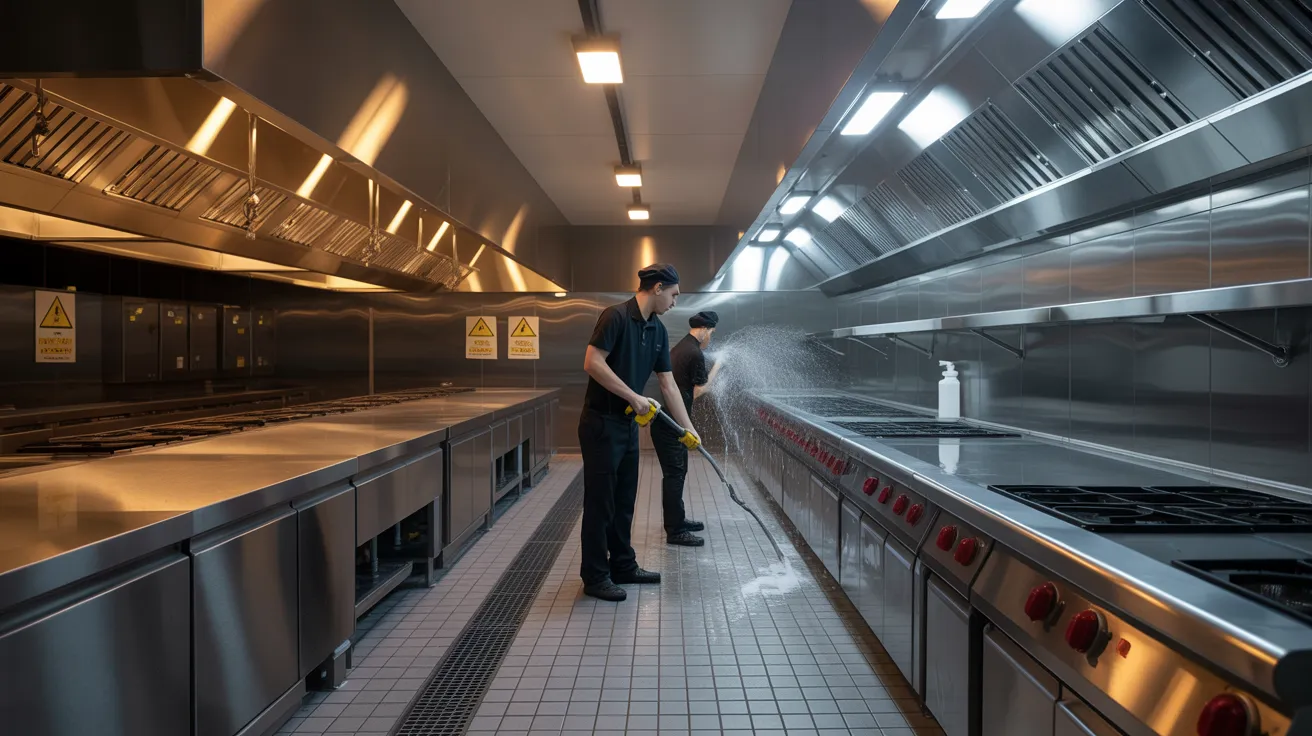
Brampton cleaning services zero in on kitchens, floors, and restrooms as each zone involves distinct food safety, slip-and-fall, and wellness risks. In industrial kitchens, you need degreasing on cook lines, equipment exteriors, drains, prep surfaces, and splash zones to reduce bacterial growth and pest activity.
Professional floor upkeep with documentation is also included. is also provided as part of the service.
For restroom sanitation, cleaners sanitize high-touch surfaces, bathroom fixtures, stall dividers, supply dispensers, and trash receptacles, then replace products and reduce odor. They also maintain restaurant cleaning supply rooms where product storage, sink cleanliness, and drain systems impact daily sanitation standards and worker protection.
The Importance of Food Safety Cleaning in Brampton
Brampton businesses need to implement food-safe cleaning standards for meeting health code requirements and passing inspections. You also minimize cross-contamination by cleaning and sanitizing food-contact surfaces, equipment, and high-touch areas correctly. Most importantly, you safeguard community wellness by reducing the chance of food poisoning in your establishment.
Regulatory Code Requirements
Because Brampton food establishments operate under stringent health requirements, food safety cleaning directly influences your ability to meet health code requirements, protect customers, and sidestep enforcement action. You must maintain sanitary food-contact surfaces, documented cleaning schedules, correct sanitizer application, and auditable operational standards that comply with municipal and provincial inspection expectations.
Inspectors review your operation to confirm that your cleaning program maintains safe storage, machinery hygiene, waste handling, and washroom maintenance.
Contamination Control
Following regulatory requirements depends on your skill in stopping cross-contamination in daily food handling and cleaning. You must separate raw ingredients from ready-to-eat foods, sanitize prep surfaces between tasks, and store chemicals away from food-contact items. Clear procedures reduce transfer risks and support consistent compliance during inspections.
Building allergen segregation prevents priority allergens from contacting common workstations, storage, or apparatus. Utilize dedicated cutting boards, color-coded tools, and precise instrument labeling so staff don't mix items during preparation or service.Enforce handwashing after handling uncooked meats, shellfish, egg items, or allergen substances. Refresh cleaning cloths frequently, and confirm sanitizer strength with test strips. When your team follows these practices each shift, you foster a cleaner, more secure operation that exceeds Brampton's safety standards consistently.
Community Health Protection
If proper sanitation declines, you don't merely risk a failed inspection—you boost the probability of foodborne illness affecting customers, staff, and the broader Brampton region. You also undermine your responsibility in safeguarding community wellness, especially in high-traffic food premises where contamination can spread quickly through surfaces, equipment, and touchpoints.
You require sanitation protocols that remove contaminants, disinfect correctly, and verify outcomes. This involves adhering to exposure times, employing authorized sanitizers, logging schedules, and training employees to meet health-unit expectations. These mechanisms support pathogen reduction by limiting pathogens before reaching food or hands. Across Brampton, effective sanitation protects at-risk populations, limits outbreak risk, and shows your diligence. When you maintain proper protocols, you go beyond requirements—you meaningfully reduce risk and facilitate secure food handling city-wide.
How Can Cleaning Practices Ensure Food Safety Compliance?
Adopting rigorous cleaning routines reinforces food safety compliance by decreasing contamination threats, preventing pathogen multiplication, and ensuring your facility complies with sanitation requirements under HACCP-based programs and public health regulations. You confirm that food-contact surfaces are visibly clean and microbiologically controlled, supporting documented preventive controls and inspection readiness.
Well-executed cleaning efforts also reinforce allergen mitigation by eliminating residues that can provoke undeclared allergen exposure.
When Should You Arrange Commercial Cleaning?
Ramp up cleaning rate during peak production, equipment changeovers, spill events, and after maintenance work.
Schedule seasonal deep cleaning during shutdowns, weather-related soil buildup, or pest-pressure periods
Finding Quality Brampton Cleaning Experts: A Guide
Begin by evaluating providers based on sanitation compliance standards—not solely on price alone. You should confirm that each organization comprehends CFIA, public health, and HACCP-aligned expectations applicable to your facility. Request insurance certificates, WHMIS compliance, staff training documentation, and oversight procedures. Assess whether technicians recognize cross-contamination hazards, chemical handling protocols, and verifiable sanitation records.
You should further examine operational reliability and answerability. Request testimonials from Brampton food businesses, then review response times, corrective-action procedures, and communication standards. Validate the company facilitates supplier audits and can supply compliance documentation to authorities or third parties. Confirm equipment is maintained, colour-coded tools are applied correctly, and site-specific hazards are recognized. A experienced service protects compliance, product quality, and your brand reputation.
What details should a sanitation plan contain?
Create a documented plan that clarifies every sanitation task, standard, and responsibility prior to production start. You should detail cleaning frequencies, approved chemicals, dilution rates, contact times, tools, and verification methods for each location, surface, and apparatus. Incorporate pre-operational inspections, corrective actions, and employee training requirements.
Your plan should also include cross-contamination controls, waste handling, pest-prevention measures, and documented schedules for restrooms, drains, floors, and food-contact areas. Specify how you'll separate raw and ready-to-eat processes, help with ingredient tracking, and copyright accurate allergen labeling through validated cleaning between product changes. You should define accountability, maintain signed records, and check results against regulatory standards, HACCP controls, and customer requirements. When gaps appear, revise procedures immediately and retrain staff.
Regular Posed Inquiries
Can sanitation providers support overnight shifts in Brampton facilities?
If you manage controlled environments, you'll also require records that enable inspections and maintain assurance.
Are hazard containment solutions provided from sanitation professionals?
Yes, you can expect Brampton cleaning experts who provide hazard containment services. They manage hazardous materials, assess risks, contain contamination, and begin swift cleanup to minimize risk and prevent business interruption. You should confirm response times, training certifications, PPE protocols, and waste management. If your facility must meet regulatory requirements, choose a provider that records events, maintains regulatory procedures, and enables compliance verification.
Do plant-based disinfectants perform safely on food-handling equipment?
In essence, green disinfectants are safe for surfaces contacting food provided you source disinfectants approved for food contact that satisfy compliance requirements. Check contact times, dilution ratios, and rinse procedures ahead of deployment. Natural-based solutions decrease harsh chemical exposure, although you must have evidence of effectiveness against harmful bacteria. For maintaining residue-free areas, stick to precise manufacturer get started instructions and confirm the disinfecting agent satisfies food sanitation requirements.
Can maintenance plans flex with seasonal production changes?
Absolutely, cleaning schedules can be customized for seasonal variations. Adjust frequencies, staff levels, cleaning agents, and testing procedures to align with seasonal patterns while sustaining compliance standards. Decrease equipment downtime through organizing sanitization surrounding production shifts, peak volumes, and usage patterns. Additionally, update standard operating procedures, employee training, and facility monitoring to reflect seasonal hazards, novel allergens, or increased soil loads. Frequent reviews keep your program efficient.
Are professional cleaning companies offering staff training on hygiene protocols?
Certainly, professional cleaning experts train your employees on sanitation best practices. You secure employee development on correct chemical practices, contact times, cross-contamination prevention, machine disassembly, and documentation procedures. They typically align instruction with HACCP, GMP, and CFIA or regional health bodies standards. Many execute sanitation audits to verify compliance, identify gaps, and strengthen corrective measures. This helps you maintain consistent procedures, satisfy audits, and minimize foodborne pathogen risks every day.
Summary
When you partner with Brampton food safety and commercial cleaning experts, you aren't merely cleaning—you keep your operation inspection-ready and your standards compliant. From kitchens to processing floors, every polished surface and maintained area helps reduce unwelcome guests and prevent costly setbacks. By scheduling service at the right intervals and following a clear cleaning plan, you protect staff, patrons, and your reputation. In a tightly regulated environment, clean spaces are essential—they're fundamental to proper operations.